Hotel Wellness Business Models: Guest Access, Day Passes or Memberships?
Compare three access models, their operating demands and the risk of counting the same wellness revenue twice.
Read the guide →5 Elements
Work through capacity, contribution and break-even using clearly hypothetical inputs. No fixed ROI or room-rate uplift is promised.
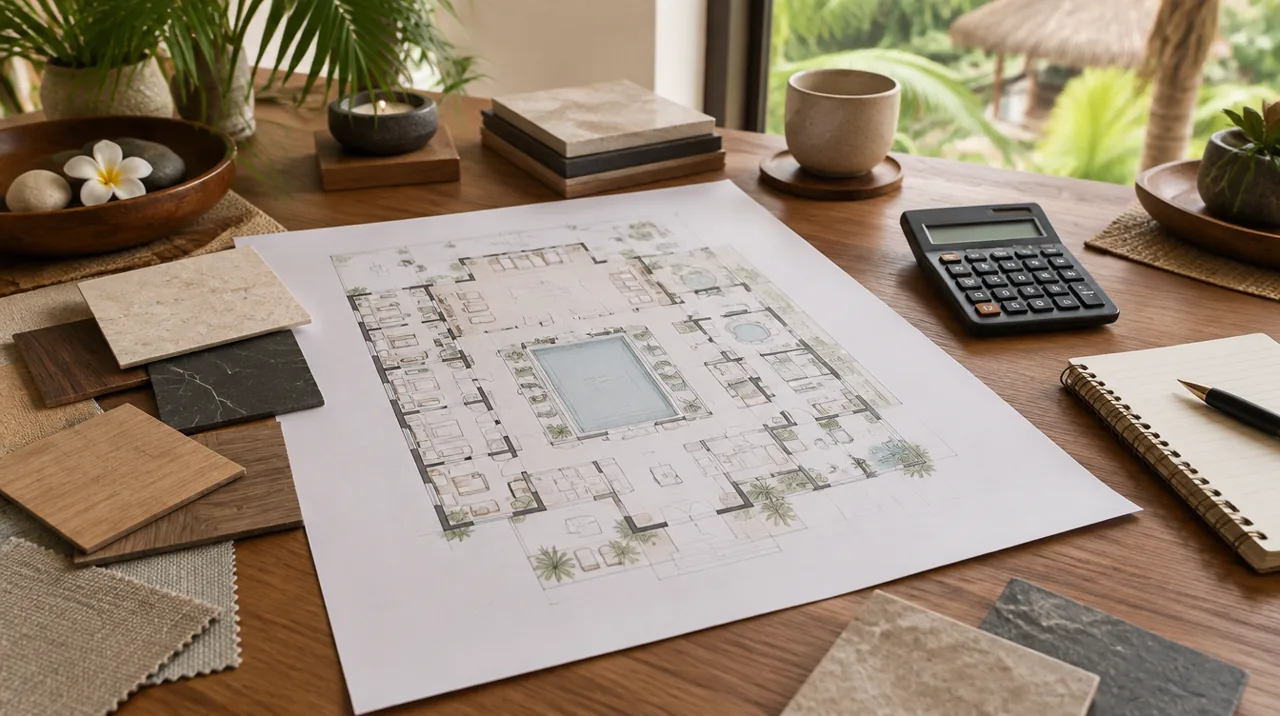
A wellness project is commercially viable only when a plausible guest service fits its physical capacity and operating costs. The fact that wellness is a growing category does not establish demand for your particular room or justify a promised increase in hotel ADR. Keep paid-session revenue, package inclusions and possible room-rate effects separate.
Start with three questions: how many sessions can the space genuinely accommodate; how many can you reasonably sell; and what does delivering each session and maintaining the facility cost? A first scenario can reveal missing assumptions before equipment is ordered.
| Input | Example assumption | Meaning |
|---|---|---|
| Operating days | 30 | Calendar assumption, not a demand forecast |
| Sessions sold per day | 8 | Bookings actually completed, not theoretical capacity |
| Session price | IDR 250,000 | Example only; not our price |
| Variable cost per session | IDR 50,000 | Example consumables and direct service costs |
| Monthly fixed operating cost | IDR 20,000,000 | Example staffing and allocated operating costs |
With those illustrative inputs, monthly sales are 30 × 8 × IDR 250,000 = IDR 60,000,000. Variable costs are IDR 12,000,000. Contribution after the assumed fixed costs is IDR 28,000,000. That is not net profit: depreciation, financing, taxes, shared hotel costs and other excluded items still need treatment.
The illustrative break-even volume is 20,000,000 ÷ (250,000 − 50,000) = 100 sessions a month, or about 3.4 sessions per operating day. Rounding a planning calculation does not mean the business can sell a fraction of a session.
| Sessions/day | Monthly sales | Contribution after example costs |
|---|---|---|
| 3 | IDR 22.5 million | −IDR 2 million |
| 5 | IDR 37.5 million | IDR 10 million |
| 8 | IDR 60 million | IDR 28 million |
Leave time for cleaning, reset, guest briefing and maintenance. Shared facilities also need rules for private bookings, resident access and peak demand. If the concept depends on continuous full use, stress-test a lower booking volume, equipment downtime and staffing absences.
A simple investment-to-contribution ratio is not a complete payback model. If an example investment is IDR 600 million and recurring contribution is IDR 28 million, simple payback would be about 21.4 months before the excluded costs and ramp-up. It is an illustration, not a quotation or expected result. Use your own validated costs and a qualified financial review before an investment decision.
Strategy consulting can help align the concept and its assumptions. Confirm separately whether your engagement includes a formal financial feasibility study.
Guides for project decisions
Compare three access models, their operating demands and the risk of counting the same wellness revenue twice.
Read the guide →Prepare a clear consulting brief for a hotel or development: inputs, deliverables, responsibilities and a fair way to compare proposals.
Read the guide →Translate social bathing, private wellness and thermal circuits into a practical brief for your hotel, resort or villa development.
Read the guide →5 Elements
Start with a introductory project discussion or send us a message on WhatsApp with your project type, location, and timeline.