For many hotel owners, a spa is still treated as a supporting amenity. That view is becoming outdated. In the right property, a branded spa can work as a revenue engine, a positioning tool, and a stronger reason to book.
The upcoming L’Occitane en Provence Spa at Hilton Chania Old Town Resort & Spa in Crete is a useful example. On its own, a brand partnership does not prove profitability. But it does show where the market is moving: hotels increasingly want wellness concepts that combine treatment design, retail, guest recognition, and a clearer commercial identity.
Why this matters now
Recent coverage around the Chania opening points to a consistent pattern. The spa is being framed not only as a treatment facility, but as part of a wider hospitality proposition that blends wellness, gastronomy, and year-round destination appeal.
That matters because many hotels still struggle with a spa positioning problem. If the spa is described only as a place to relax, it becomes easy for guests to ignore and hard for operators to justify. A branded model changes that equation by giving the spa:
- a more recognizable consumer-facing identity;
- built-in product language and ritual structure;
- retail opportunities;
- stronger merchandising potential;
- clearer premium positioning.
This does not guarantee performance, but it can reduce ambiguity.
What a branded spa does differently
The real value of a branded spa is not only the logo. It is the operating discipline and guest clarity that the brand can help create.
In practical terms, a strong branded spa can support:
- treatment menus with a clearer point of view;
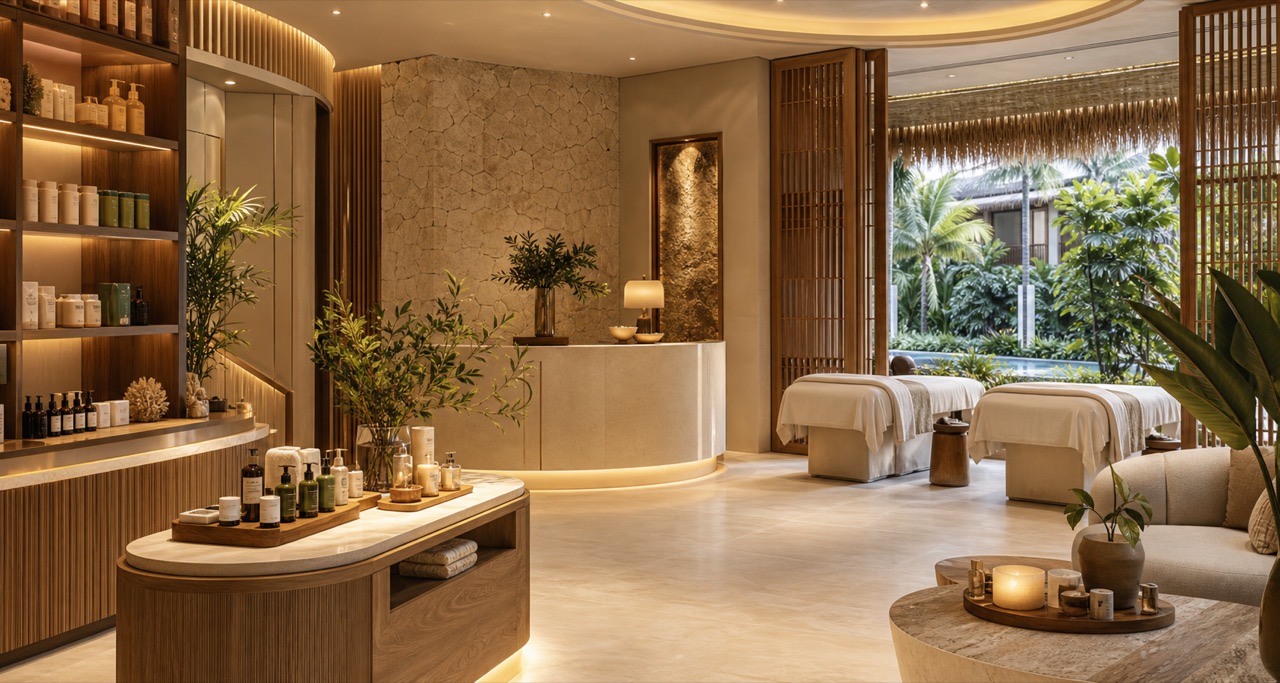
- product retail that extends spend beyond the treatment room;
- more consistent storytelling across rooms, marketing, and public areas;
- packages that connect spa, stay, and dining;
- a stronger bridge between hotel guests and local day visitors.
For hospitality owners, this is important because the spa stops being a passive facility and starts behaving more like a commercial sub-brand within the property.
Where the revenue logic becomes credible
The business case for a branded spa tends to sit across several revenue layers rather than one single line item.
Those layers can include:
- higher ADR support through stronger premium positioning;
- higher spend per stay through treatments and add-ons;
- retail sales;
- memberships or local access programs;
- day-guest capture;
- seasonal or event-led wellness packages.
This model is especially relevant in leisure destinations, resort environments, and lifestyle hotels where aesthetic identity and experiential value both matter.
What hotel owners should evaluate before saying yes
Branding alone is not enough. A branded spa only works when the operating model is as strong as the visual identity.
Before entering a partnership, owners should ask:
- Will the brand help drive bookings or only improve image?
- Is there a realistic retail component?
- Does the treatment concept fit the property’s guest profile?
- Can the staffing model support the promised quality?
- Will the spa attract only in-house guests or also locals and day visitors?
These questions are more important than prestige alone. A beautiful branded spa with weak utilization is still a weak business asset.
Risks and limitations
The Chania example is still a launch signal, not a proof of business outcome. News coverage and supporting market commentary can show positioning intent, but they do not demonstrate actual guest demand, operating margin, or payback period.
There are also practical risks:
- CAPEX can be high;
- recruitment and training standards can be demanding;
- brand fees or constraints may limit flexibility;
- retail may underperform if guest flow is weak.
That is why the smartest approach is to evaluate a branded spa as a revenue system, not as a decorative upgrade.
What operators should do next
If you are assessing a branded spa partnership, use a commercial screen before a design screen.
- Define the guest segment you want the spa to serve.
- Map the full revenue model, including retail and day access.
- Stress-test staffing, seasonality, and utilization assumptions.
- Build the spa into hotel packages and booking logic from the start.
- Measure success by spend per guest, treatment utilization, retail conversion, and repeat visit patterns.
This keeps the decision anchored in performance rather than aspiration.
Conclusion
A branded spa can be much more than a luxury amenity. When the concept, partner, and operating model align, it can strengthen room pricing, increase guest spend, support merchandising, and sharpen the hotel’s destination identity.
The hotels that benefit most will be the ones that evaluate branded wellness as a business platform, not just as a beautiful finishing touch.
FAQ
Does a branded spa automatically improve hotel profitability?
No. Branding may improve clarity and appeal, but profitability still depends on utilization, staffing, pricing, retail, and package design.
Which properties are the best fit for a branded spa model?
Luxury resorts, lifestyle hotels, leisure destinations, and premium properties with strong guest spend potential are typically the best fit.
Is retail really important in a branded spa?
Yes. Retail can be one of the clearest ways to extend spend beyond treatments and reinforce guest memory after the stay.
What should owners test before committing?
They should test demand assumptions, staffing feasibility, treatment mix, retail potential, and whether the spa contributes to room conversion and overall guest spend.
Sources
- Hospitality Ambassadeurs, “L’Occitane en Provence Spa: A wellness experience in Chania,” May 5, 2026: https://hospitalityambassadeurs.com/loccitane-en-provence-spa-a-wellness-experience-in-chania/
- SKAI, “Hilton chooses Crete for its strategic expansion in Greece,” May 20, 2026: https://www.skai.gr/news/business/i-hilton-epilegei-tin-kriti-gia-ti-stratigiki-epektasi-tis-stin-ellada